Read the paper
Understanding a Place: A Practical Framework for Local Resilience
This paper sets out the ideas behind localE and the questions that guide our work.
Link will be added when the paper is published on the site.
localE began with a series of conversations about some very large problems.
In 2026, Caroline Lucas presented a special four-part mini-series for The Rest Is Politics called When Nature Becomes a Security Threat.
The full four-part mini-series is available to TRIP members. TRIP offers a special student membership rate; please check its website for current terms.
The series explored the connections between climate, security, food, water and migration.
It dealt with questions that can feel overwhelmingly large.
How secure are our food systems?
What happens when water becomes scarce?
How will a changing climate affect where and how people live?
How resilient are the systems on which modern life depends?
The conversations were largely about national and international challenges.
But they prompted a much smaller question:
What do these things look like from where we actually live?
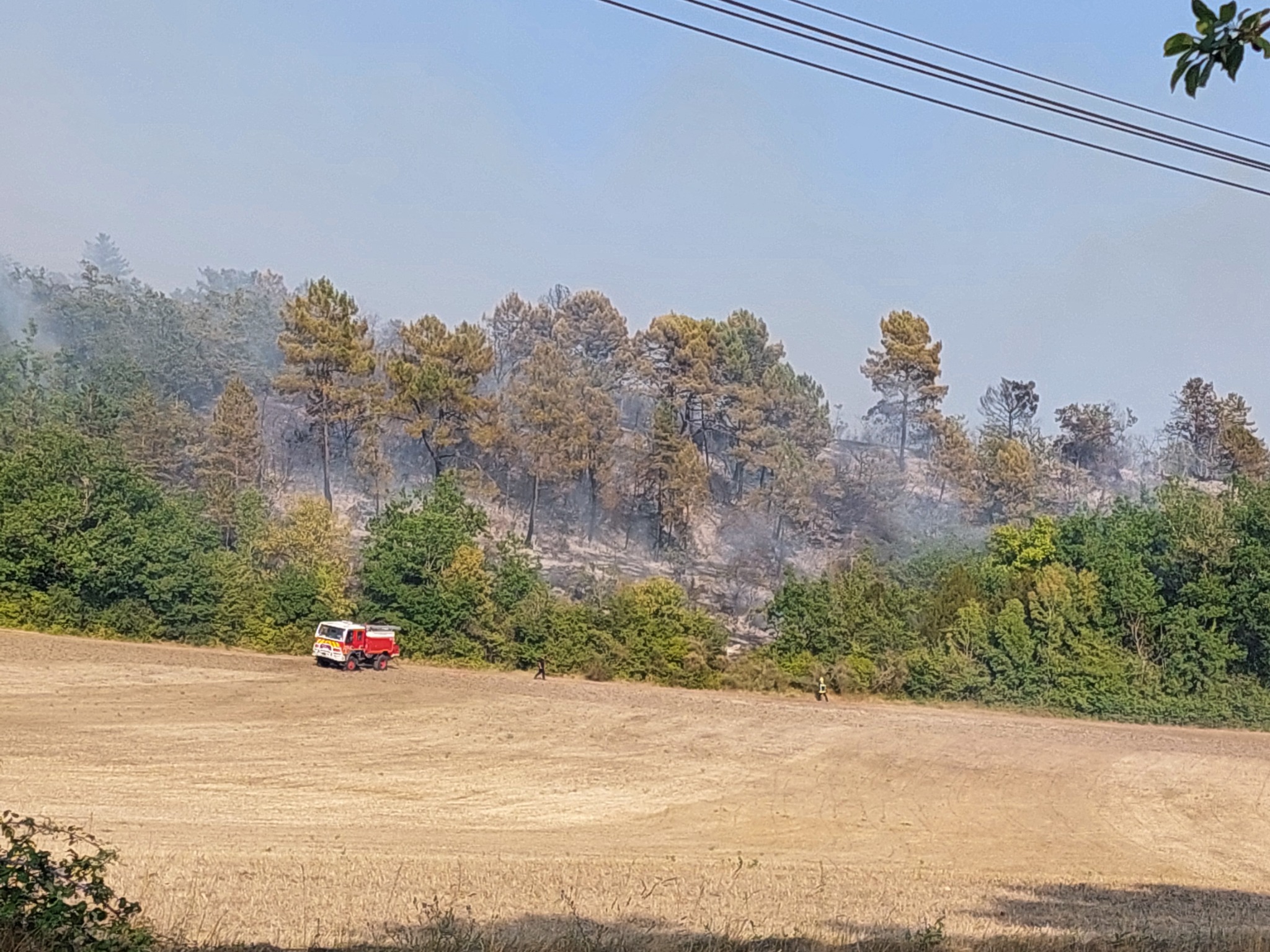
No small community can solve climate change, water scarcity, food insecurity or demographic change on its own.
But every community experiences change somewhere specific.
In its fields and gardens.
Its water supplies.
Its homes and businesses.
Its schools and roads.
Its population.
Its local economy.
And every place is different.
A farming village in south-west France will not have the same vulnerabilities, resources or opportunities as a suburb of Lille, a Mediterranean town or a community in the Netherlands.
So perhaps one useful place to start is simply to understand our own place better.
What do we know?
What is changing?
What resources do we have?
Where might we be vulnerable?
And what don't we know yet?
That sounds straightforward.
It isn't.
Useful information is scattered across national statistics, government departments, scientific organisations, local authorities, research papers, maps, databases and reports.
Some information exists nationally but not locally. Some is measured. Some is projected.
And some of the most valuable knowledge may not be in a database at all. It may belong to the farmer who has watched the same fields for forty years, the family raising children in the commune, the local business owner, or the older resident who remembers how the place used to work.
Artificial intelligence changes what is possible.
Used carefully, it can help ordinary citizens and small communities find, compare, question and understand bodies of evidence that previously required considerable time or specialist knowledge to investigate.
But AI does not know everything. It can misunderstand evidence and it can be wrong.
That is why localE starts with evidence rather than answers.
One of localE's aims is to help communities become more resilient.
Resilience does not mean predicting the future correctly.
It means understanding enough about a place — its people, water, land, economy, food, energy, waste, education and other resources — to recognise change, identify vulnerabilities and consider possibilities.
What happens after that belongs to the community.
There may be something worth doing. There may be something worth measuring. There may be something another community has already tried.
And sometimes the evidence may suggest that the best decision is to do nothing.
One commune acting alone will not solve a worldwide problem.
But local action need not remain isolated.
There are around 35,000 communes in France and many thousands more local communities across Europe.
If communities can learn more about themselves — and eventually share evidence, experience, successes and failures with one another — small actions can become part of something much larger.
A solution discovered in one place may help another. A failure may prevent somebody elsewhere repeating it. A local observation may reveal a question that deserves investigation at a much larger scale.
We cannot solve worldwide problems alone.
We can understand our part of them, become more resilient — and act together.
localE therefore begins not with a programme, a product or a prescription.
It begins with curiosity.
Ask a question about a place.
Find the best evidence available.
Listen to the people who know the place.
Distinguish what we know from what we think.
Be clear about what we still don't know.
Then leave the decisions where they belong.
Evidence informs. People decide.
This paper sets out the ideas behind localE and the questions that guide our work.
Link will be added when the paper is published on the site.
Caroline Lucas's special four-part mini-series for The Rest Is Politics explores the connections between climate, security, food, water and migration.
Original programme links and our accessible guide will be added here.
The definitive localE paper developed from the questions raised by the TRIP series.